Leaving Survival Mode after Trauma (Know You’re Healing)
Experiencing trauma can have a range of affects that are unique to each person, but half to two-thirds who are able to leave their survival mode after trauma have reported positive growth–known as post-traumatic growth.
Licensed clinical psychologist and expert on the treatment of trauma, Dr. Janina Fisher, says it like this: “We can’t change the past, but we can change our relationship to it.” That’s exactly the concept behind post-traumatic growth. When faced with any traumatic event, whether it’s experiencing psychological or physical abuse, the unexpected loss of a loved one, or a scary health crisis to name a few, many experience positive changes as they heal.
What leaving survival mode means
As some heal and leave survival mode, post-traumatic growth (PTG) can emerge. PTG occurs after an individual faces a traumatic struggle or situation. These types of events can lead a person to rethink how they see themselves, others, and the world around them and help them to grow in a positive way. Changes can be lifelong and influence how a person lives.

A recent Netflix documentary on the abduction of 14 year old Elizabeth Smart in 2002 illustrates how such a traumatic experience can result in a clear purpose for the survivor. As an adult, Smart leads a life of advocacy for child safety through the Elizabeth Smart Foundation. She also described the shift in her inner monologue from victimhood to a mindset of strength and resilience.
However, it’s important to note that not everyone experiences PTG. Those that do exhibit certain key characteristics.
Increased resilience. After enduring their difficulties and learning to advocate for themselves, a person may realize their personal strength and become more confident in themselves.
Improved relationships. Deeper connections may form with those in their network and they may also develop more compassion and empathy for others.
Increased appreciation and gratitude. A person may develop an increased sense of gratitude for simple everyday experiences and moments.
Receptive to change. A person may become more willing to consider new possibilities, opportunities, or interests than they were before.
Post-traumatic growth vs. Trauma response
A trauma response is an immediate and automatic response that involves your nervous system switching into survival mode (usually described as fight, flight, freeze, or fawn). Once you have worked through this dysregulation and have regained a sense of security over time, PTG can occur. It’s important to mention again that every person is unique when faced with trauma. Some might experience post-traumatic growth, others might only have a trauma response, and some might experience some degree of both.
Wondering if you’re experiencing PTG or if you’re still stuck in a trauma response? Refer to this comparison table.
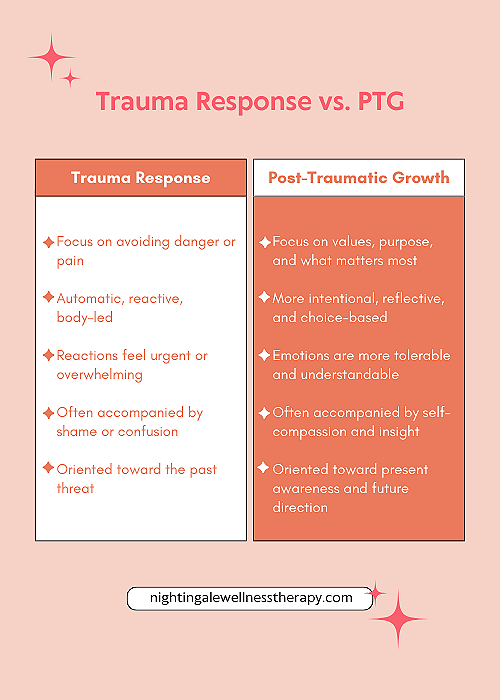
Realistic expectations for PTG with relational trauma
Working through and processing your trauma takes time and it’s helpful to have an idea of what to expect realistically as you heal. Healing shouldn’t be thought of as linear; you can experience setbacks in relationships with certain people or in certain situations even as your communication, for example, improves in general.
Likewise, just because you experience PTG doesn’t mean that you’ll never experience negative reactions in your relationships. However, you will be more aware and in-control of your responses to those triggers and likely recover faster than you have in the past. You can also expect to have a greater awareness in how you choose to respond.

Relationships will not feel easier right away when you emerge from survival mode either, nor will feelings of guilt and discomfort automatically disappear. As you are able to set better boundaries that are focused on changing and improving relationship dynamics, remember that growth can feel lonely at times. This change may be needed as you outgrow some relationships that no longer serve you.
Overall, as you heal, you can expect to be able to give yourself more compassion and make more emotionally safe connections that can help to fuel your growth.
Therapy to help with trauma recovery
If you’ve experienced trauma and find you need extra help in your recovery, here are some types of therapy that can help you not only survive but thrive in your healing.

EMDR Therapy
EMDR therapy, which stands for Eye Movement Desensitization and Reprocessing, is specifically focused on trauma healing by helping the nervous system to finish processing traumatic memories so that they no longer feel ongoing and threatening. EMDR uses bilateral stimulation treatment–like tapping, guided eye movements, or tones–to accomplish this. You can read more about EMDR therapy here.
Somatic Therapy
Somatic therapy is another trauma-informed approach to healing that relies on the body’s stored experience of trauma. This type of therapy recognizes that the nervous system can hold trauma in postures, tensions, and sensations and aims to help individuals recognize, regulate, and release these responses to trauma so your system can calm itself and return to safety.
Attachment-focused Work
Attachment-focus work helps treat relational trauma, like childhood trauma, through repairing attachment patterns that have left individuals feeling unsafe, neglected, hurt, and unworthy of care and love from others. This work helps rewire the nervous system to allow for emotional regulation so that negative internal beliefs can be rewritten and trust and connection with others can be restored.
Post-traumatic growth outside of therapy
You do not have to go to therapy to experience PTG, but certain practices can help support it.

Exercise increases neuroplasticity: Neuroplasticity is the ability of your brain to rewire, adapt, and make new neural pathways and connections in response to experiences like trauma recovery. Movement helps increase this neuroplasticity. Try aerobic activities like walking or swimming and incorporate strength training and rhythmic movement to help with regulation. Maintaining consistency is essential to strengthen those new pathways through repeated activation.
Change relationship dynamics: To continue your growth, you might need to adjust and reshape your relationships with others to support who you’re becoming rather than who you’ve been in the past. This means you might need to take a closer look at your current relationships to identify and expand your awareness of stressors. As you notice what triggers you, you can start building small boundaries. In some cases, you may find that some relationships cause stress for you and reducing contact with those people can help with your growth.
Nervous system work: Being able to keep your body regulated under stress and during challenging situations is why nervous system work is important for PTG. This work will help you to take more control of your responses to triggers rather than just reacting. Practices you may try for nervous system work include orienting (naming three things you see that signal safety), slow breathing exercises, and grounded movement (yoga or stretching).
What life feels like after survival mode
When you’re in the thick of responding to trauma and haven’t had enough time to process it, the idea of experiencing any positive growth in your life can feel far away. Even after leaving survival mode, you can still struggle with trauma. Recovery is a journey and the most important thing to look for in your healing is evidence of continued progress.
Know that after trauma, you have the capacity for creating a deeper, lasting positive change in your life. This might mean finding a new perspective, purpose, or unknown strength you didn’t know you possessed. Know that if you got through your past situation to come out on the other side, you can make it through future struggles.
Allison Kirvan is a trauma-informed therapist who specializes in EMDR therapy for residents of Nevada. Book a call with her to start your own healing journey today.